
Last Updated on November 12, 2026
Nearly nine out of ten used car buyers skip at least one safety step in the buying process, according to industry research on used-vehicle purchases [1]. That single shortcut often costs thousands of dollars later in surprise repairs, title problems, or inflated loan interest. Learning how to find a used car for sale near you: dealer fees, inspection, financing, and negotiation checklist steps requires more than scrolling listings. It demands a repeatable process you can apply to every dealer visit, every private seller meeting, and every financing offer that lands in your inbox.
This guide breaks the search into clear stages: where to look, how to screen sellers, what to inspect, how to finance smartly, and how to negotiate the real price you will pay at signing.
Key Takeaways
- Always request the out-the-door price in writing before discussing monthly payments or trade-in value.
- Federal rules require dealers to post a Buyer’s Guide sticker disclosing warranty terms on every used car [2][3].
- Used car loan rates vary widely by credit tier, so getting pre-approved before shopping protects your negotiating position [4][5][6].
- An independent mechanic inspection and a vehicle history report are non-negotiable, even for certified pre-owned cars.
- Compare dealer, private-party, and online retailer options side by side since each has different pricing and risk trade-offs [7][8].
Where to Search and How to Screen Dealers Near You
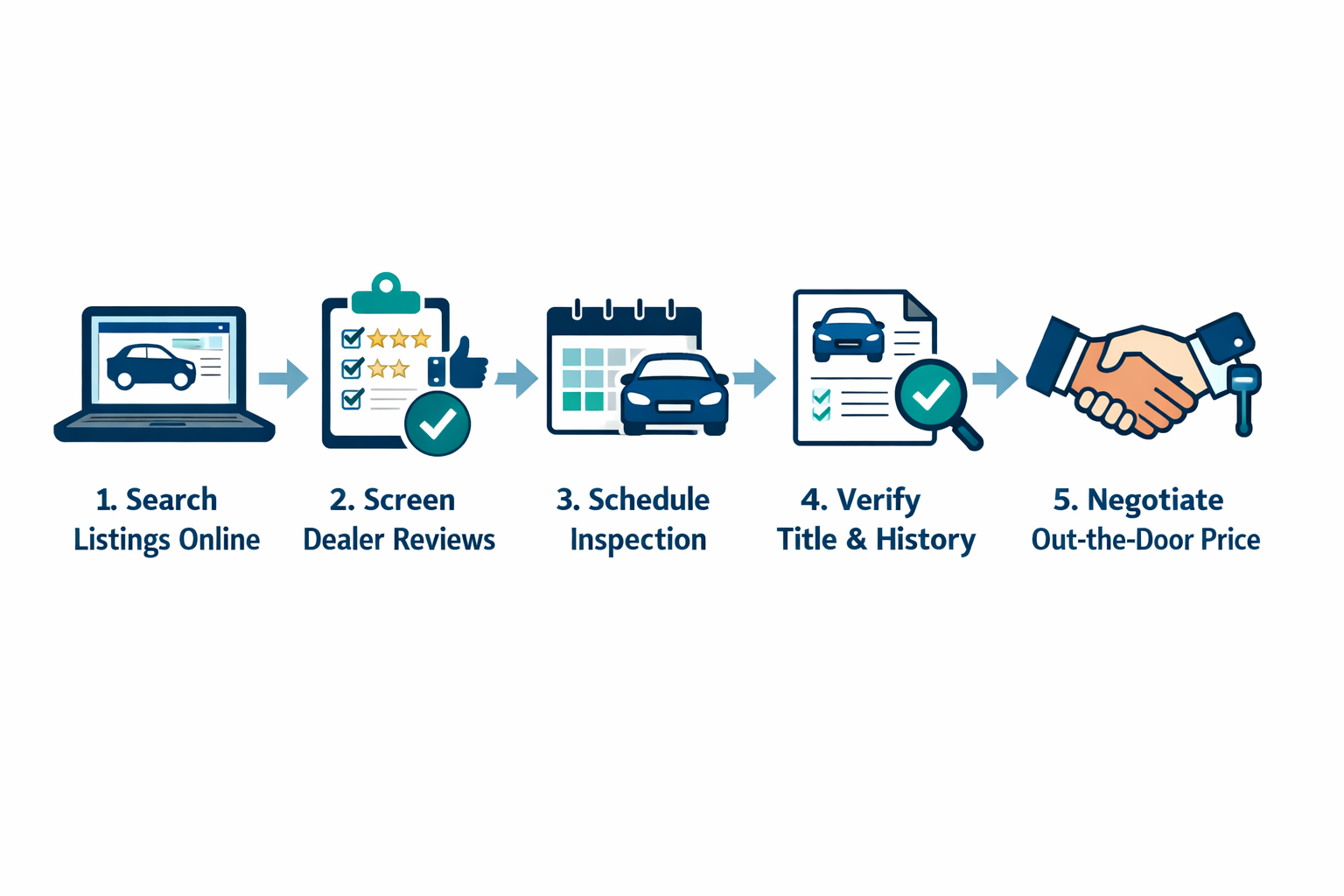
Local search starts with casting a wide net, then narrowing fast. Check franchise dealers, independent used-car lots, online marketplaces, and certified programs in the same pass so you can compare pricing patterns across each channel [7].
Before visiting any lot, screen it the way a background check works. Look up Better Business Bureau ratings, read recent customer reviews, and check whether the dealer discloses fees upfront on its website. The Federal Trade Commission’s CARS Rule, which took effect to curb deceptive pricing, now requires dealers to be more transparent about add-on charges and prohibits advertising a price the dealer has no intention of honoring [2][3]. Enforcement has tightened through 2026, so a dealer that resists giving a written price breakdown is a warning sign, not a negotiating quirk.
If you are cross-shopping vehicle types, resources like a guide on choosing a used SUV for reliability, cargo space, and hidden ownership costs or a roundup of the best used cars to buy in 2026 can narrow your list before you ever call a dealer.
Dealer vs. Private-Party vs. Online Retailer
Each channel has a different risk and price profile:
| Channel | Typical Price | Inspection Access | Paperwork Risk |
|---|---|---|---|
| Franchise dealer | Higher, more fees | Easy, on-site | Low, dealer handles title |
| Independent lot | Mid-range | Moderate | Medium, verify licensing |
| Private seller | Lowest | You arrange it | Higher, you handle title |
| Online retailer | Fixed, few fees | Limited, trial period instead | Low, but less negotiation |
Private-party sales often save money but shift all the verification work onto the buyer [8]. Online retailers simplify paperwork but typically offer little room to negotiate price.
Dealer Fees, Inspection Checklist, and Title Verification
Every used car ad with a tempting price can hide fees that inflate the final bill. Federal rules require a Buyer’s Guide window sticker on every used vehicle sold by a dealer, spelling out whether a warranty is included and what it covers [2][3]. Read that sticker before you read the price tag.
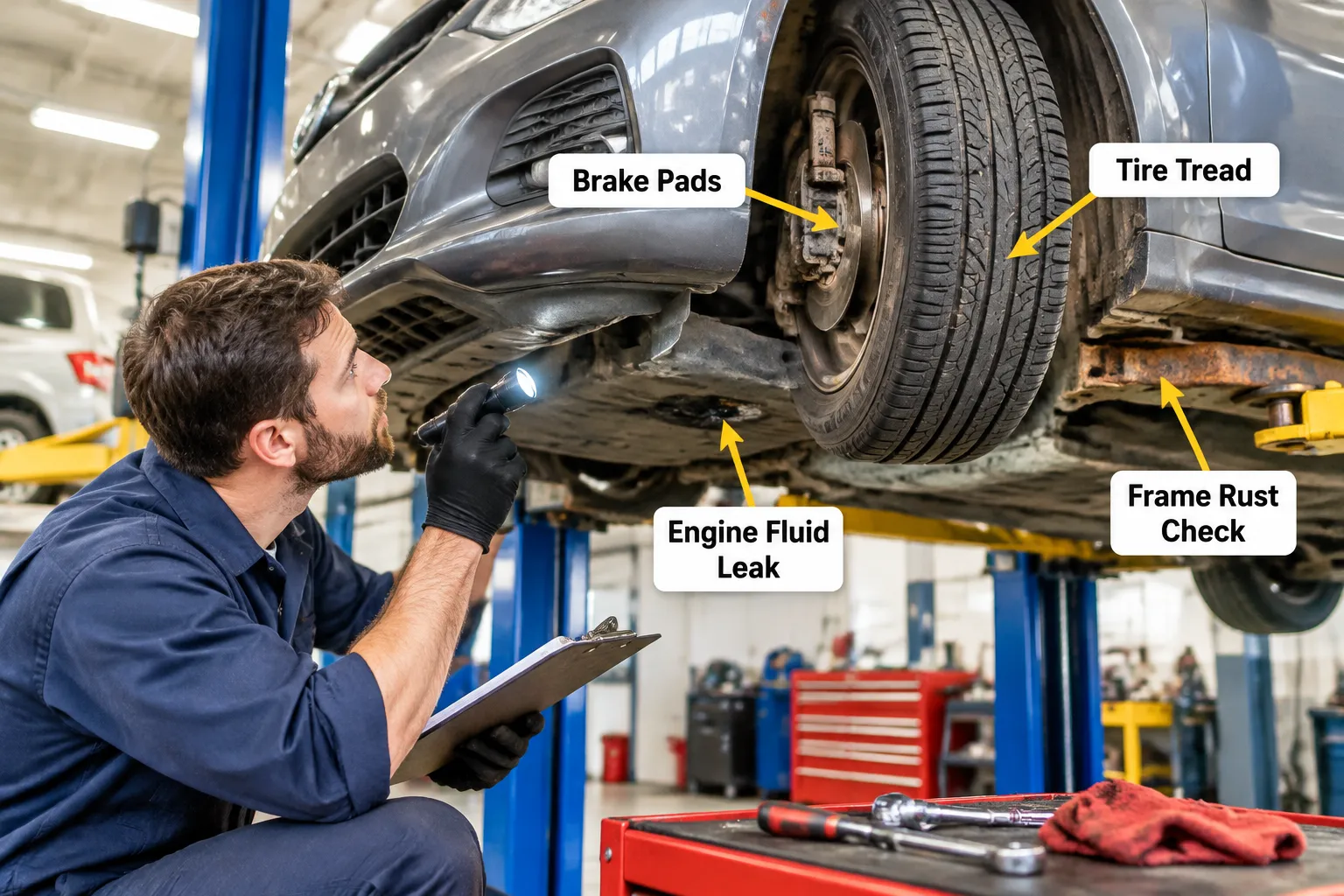
Common dealer fees to question include documentation fees, dealer prep charges, and add-on products like nitrogen-filled tires or extended protection plans. None of these are illegal, but all are negotiable, and the FTC’s CARS Rule now pushes dealers toward clearer disclosure of these junk fees [3]. Ask for every fee itemized in writing before you agree to anything.
Your inspection checklist should include:
- An independent mechanic inspection, not just the dealer’s own technician [1][7][9]
- A full vehicle history report checking for accidents, flood damage, and odometer rollbacks
- A free recall check using the vehicle identification number
- A title check confirming no liens, salvage brands, or out-of-state title washing
- A test drive covering highway speeds, stop-and-go braking, and a cold start if possible
For certified pre-owned vehicles, the inspection bar is already higher, but it is still worth understanding what the certification actually guarantees. A detailed breakdown of certified used car benefits and warranty coverage explains what is included and what still needs independent verification. Pricing research tools also matter here; cross-check the asking price using a resource like using Kelley Blue Book for used cars so you know the fair market range before you negotiate.
Special Considerations for Used EVs
Used electric vehicles need an added layer of scrutiny. Battery health reports, charging cable condition, and remaining manufacturer battery warranty terms matter more than mileage alone. Ask for a battery state-of-health printout and confirm whether the battery warranty transfers to a second owner, since terms vary significantly by manufacturer.
Financing Strategy for How to Find a Used Car for Sale Near You
Financing is where many buyers lose the most money without realizing it. Used car loan interest rates in 2026 continue to vary sharply by credit tier, with borrowers in the lowest credit bands paying rates several times higher than those with top-tier credit [4][5][6]. Lenders like credit unions and regional banks often publish competitive used-auto rates that undercut dealer financing, especially for well-qualified borrowers [10].
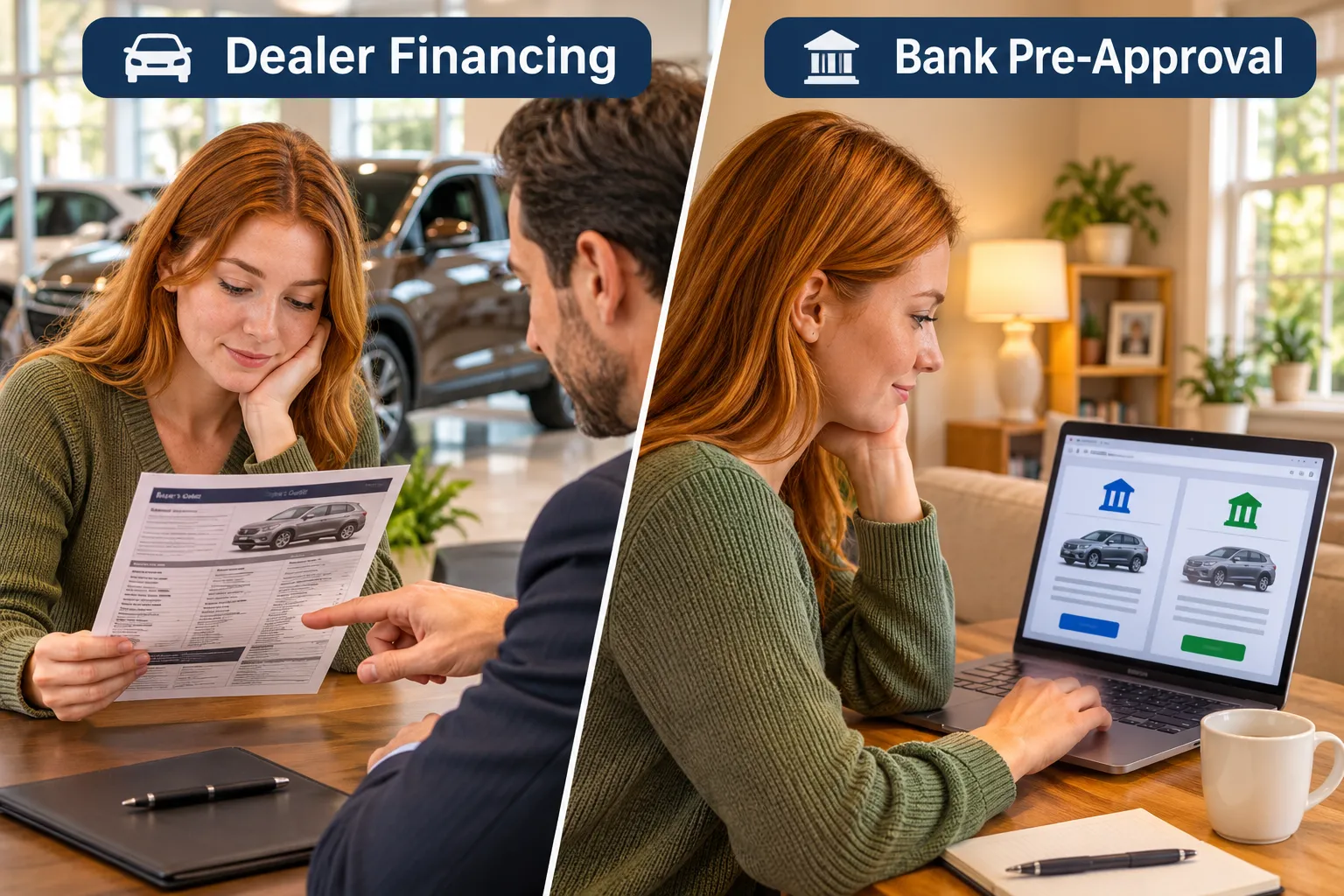
Get pre-approved before you walk onto a lot. A rate in hand turns dealer financing into a competition, not a default.
Steps to build a smart financing strategy:
- Check your credit report and score before shopping, so you know your realistic rate tier [5][6].
- Get at least two pre-approval quotes, one from a bank or credit union and one from an online lender [4][10].
- Compare total loan cost, not just the monthly payment. A longer term lowers the payment but raises total interest paid.
- Bring your pre-approval to the dealer and ask if they can beat it. Let them compete for your financing, not just your purchase.
- Avoid stretching loan terms past 60 to 72 months unless the total interest cost still makes sense for your budget.
Real-world comparisons from late 2026 show that buyers who shopped multiple lenders before visiting a dealer consistently secured lower annual percentage rates than those who financed exclusively through the dealership’s in-house options [4][10]. That gap can equal hundreds of dollars over the life of a loan.
Negotiation Checklist: Locking In the Out-the-Door Price
The number that matters is not the sticker price or the monthly payment. It is the out-the-door price, the total you will actually pay including tax, title, registration, and every dealer fee. Negotiating anything else lets the dealer shift numbers between categories without changing what you owe.
Use this checklist before you sign anything:
- Request the full fee breakdown in writing, separate from the vehicle price
- Negotiate the vehicle price first, before mentioning any trade-in or financing
- Ask directly which fees are mandatory by law and which are optional dealer add-ons
- Confirm the final APR, loan term, and total interest cost match your pre-approval or beat it
- Walk through the Buyer’s Guide warranty disclosure line by line before signing
- Get everything, including verbal promises about repairs, in writing on the sales contract
Current incentives and manufacturer-backed used car deals can shift the negotiation dynamic, especially on certified pre-owned inventory with factory-backed low APR offers. Always ask the dealer directly whether any manufacturer incentive applies to the specific vehicle identification number you are buying, not just the model in general.
If you are shopping across multiple online platforms before narrowing to a dealer visit, a side-by-side look at CarMax versus CarGurus versus AutoTrader for used-car shopping can help you decide where to start your search and where pricing transparency tends to be strongest.
Red Flags That Should End the Deal
Walk away if a dealer refuses to provide the out-the-door price in writing, pressures you to sign before an independent inspection, cannot produce a clean title, or adds fees after you have already agreed on a price. None of these behaviors reflect a one-time mistake. They reflect how the dealership operates.
Conclusion
Finding the right used car near you is less about luck and more about following the same checklist every time. Search broadly across dealers, private sellers, and online retailers. Screen every seller before you visit. Insist on an independent inspection and a clean title check. Get pre-approved financing before you negotiate. And never agree to a number until it reflects the full out-the-door price, fees included.
Start your next search by picking two or three vehicles from a trusted buyer’s guide, lining up financing pre-approval this week, and scheduling an independent inspection before you make any offer. That single sequence protects you more than any single negotiating tactic ever will.
References
- How to Buy a Used Car. cars.usnews.com.
- Media. consumer.ftc.gov.
- Automobiles. ftc.gov.
- Rates. bankrate.com.
- Used Car Loan Rates. experian.com.
- Average Used Car Loan Interest Rates. cars.usnews.com.
- How to Buy Used Car. caranddriver.com.
- Buying a Used Car the Essential Guide. capitalone.com.
- How to Buy a Used Car A5221672417. consumerreports.org.
- Auto Loans. starone.org.